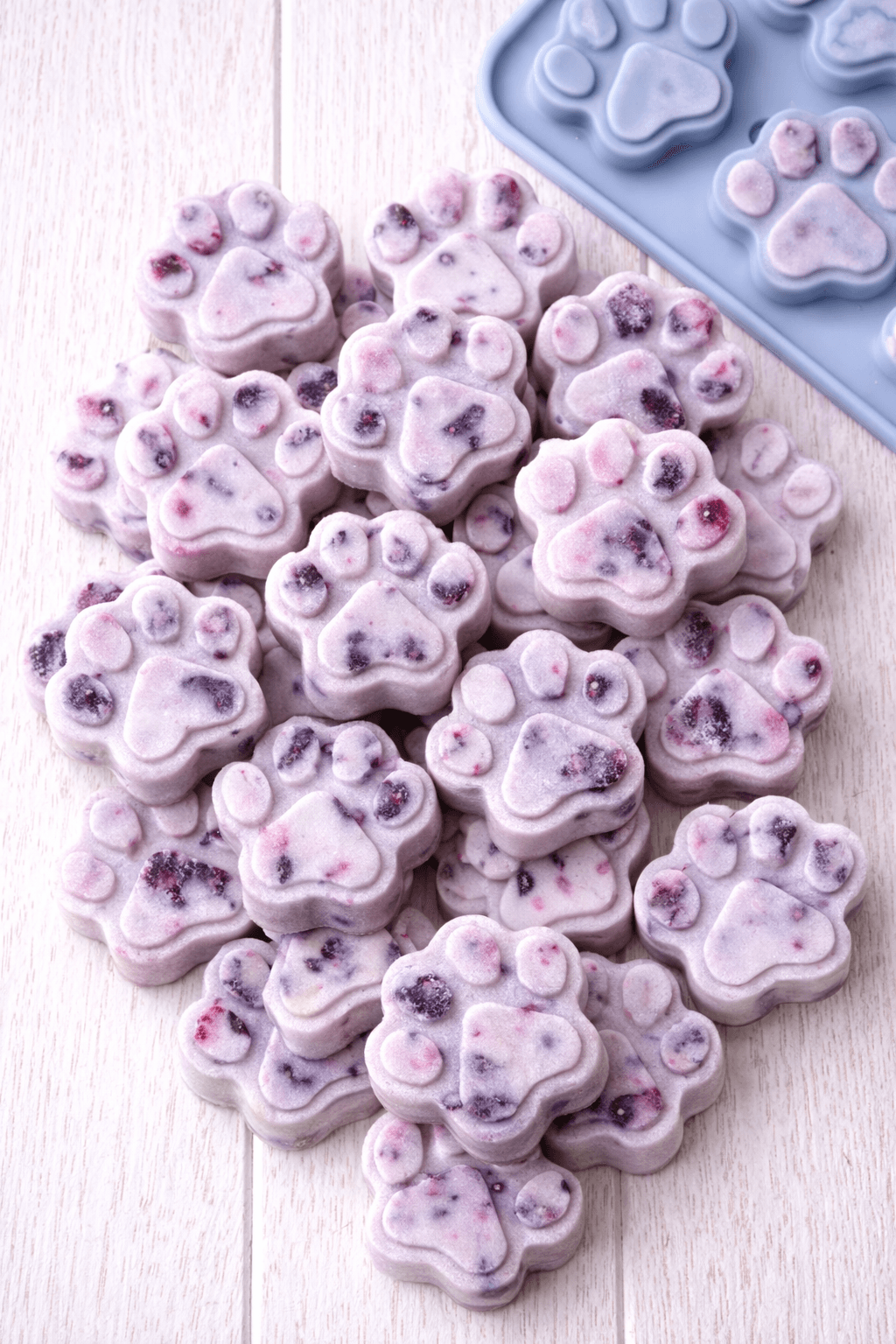
Frozen yogurt berry dog treats
Refreshing frozen dog treats made with yogurt and berries. These cooling snacks support digestion and provide antioxidants.
- Prep time
- 10 min
- Freeze time
- 3 hours
- Difficulty
- Easy
Also supports
Ingredients
Recommended portion based on dog weight:
Small: 5–10 kg
Medium: 10–25 kg
Large: 25–40 kg
Ingredients for a medium dog (example)
Step-by-step preparation
Step 1
Blend ingredients
Blend yogurt and blueberries until smooth.
Step 2
Add flaxseed
Stir in ground flaxseed.
Step 3
Fill molds
Pour mixture into silicone molds.
Step 4
Freeze
Freeze for 3 hours until solid.
Step 5
Serve
Remove from molds and serve frozen.
Estimated nutrition
Calories
20 kcal
Protein
1.5 g
Fat
1 g
Carbs
2 g
Fiber
0.4 g
Why this works
Why this works for digestive health
- Yogurt – natural probiotics
- Blueberries – antioxidants for skin health
- Flaxseed – omega-3 fatty acids
Additional notes
Storage: Store frozen up to 2 months.
Serving tip: Recommended portion: Small (5–10 kg) 1–2 treats per day, Medium (10–25 kg) 2–4 per day, Large (25–40 kg) 3–5 per day. Great cooling treat on warm days.
Substitutions: You can adjust vegetables or grains based on your dog's tolerances, but always introduce new ingredients gradually and monitor for any reactions.
Related recipes
Sensitive stomach
Chicken and pumpkin gentle digestion bowl
A gentle homemade dog meal made with lean chicken, pumpkin and rice. This easily digestible bowl helps soothe irritated stomachs and supports healthy digestion in dogs with sensitive digestive systems.
Digestive health
Turkey and sweet potato digestive support bowl
A soothing homemade dog meal with lean turkey and sweet potato. This recipe supports digestion and provides gentle fiber for dogs with sensitive stomachs.
Allergies & itchy skin
Duck and potato skin relief bowl
A hypoallergenic homemade dog meal using duck and potato, often recommended for dogs with food sensitivities and itchy skin.
Disclaimer
This recipe is intended as inspiration for homemade dog meals. Always consult with your veterinarian before making significant changes to your dog's diet, especially if your dog has health conditions or specific nutritional needs.